Rare WW2 Authentic Dug Relic 116. Panzer Division Windhund Traditions Hat
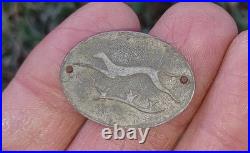
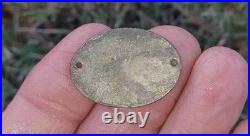
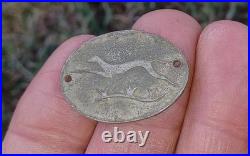
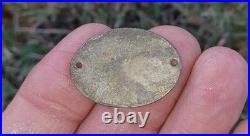
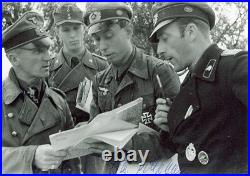
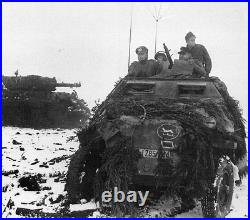
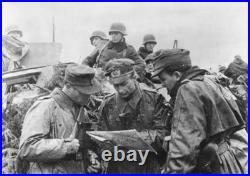
EXTREMELY RARE WW2 Original German 116th PANZER TANK "WINDHUND" Greyhound DIVISION Officers Early Sew Type Hat INSIGNIA Device - Collection Bubenheim, Germany. Here is a spectacular relic.. A very rare Panzer Division Traditions Hat Insignia of the "WINDHUND" 116th Panzer Division that would have been attached to the hat band of the officer. You can clearly see the background stippling. This is an insignia that saw warfare in the storied 116 Panzer Division.
The 116th Division was constituted in the Rhineland. Areas of western Germany in March 1944 from the remnants of the 16th Panzergrenadier. And the 179th Reserve Panzer Division.
The 16th had suffered heavy casualties in combat on the Eastern Front. And was later trapped in the Falaise Pocket. On December 10, before the offensive, it was partly refitted, with 26 Panzer IV. Tank destroyers (of which 13 were combat ready). However, it was still missing much of its organic transport.
Initially stalled by resistance and then poor bridges in attacks to cross the Our River. It back-tracked to march through Belgium. The division then fought its way as the middle spearhead of the advance on the Meuse from Samree to La Roche. Then heavy fighting at Hotton. Where it was turned back at its furthest advance in the Ardennes.Along with the 2nd SS Panzer Division. It was responsible for holding the pocket open to allow German troops to escape.
It managed to escape, although with only 600 infantry and 12 tanks intact. In October, it fought against American forces in the Battle of Aachen. With the town falling to the Americans on 21 October. It was moved to Düsseldorf for refitting.On 8 November, the division repulsed an attack from the U. During the larger Battle of Hürtgen Forest. Recapturing the town of Schmidt, thus providing the name to the 28th of the "Bloody Bucket Division". It later held the Allies.
At bay for other units to retreat, before being withdrawn over the Rhine. It then opposed the U. S advance across the Rhine, thus stopping the planned Allied breakthrough as well as opposing Operation Varsity. With 2,800 men and 10 tanks against 50,000 Allied troops and supporting tanks, the division faced the U.
On 18 April 1945, the majority of the division was forced to surrender to the U. Ninth Army, having been trapped in the Ruhr Pocket. Remnants of the division continued to fight in the Harz. Mountains until 30 April, only surrendering after all of their resources had been exhausted.